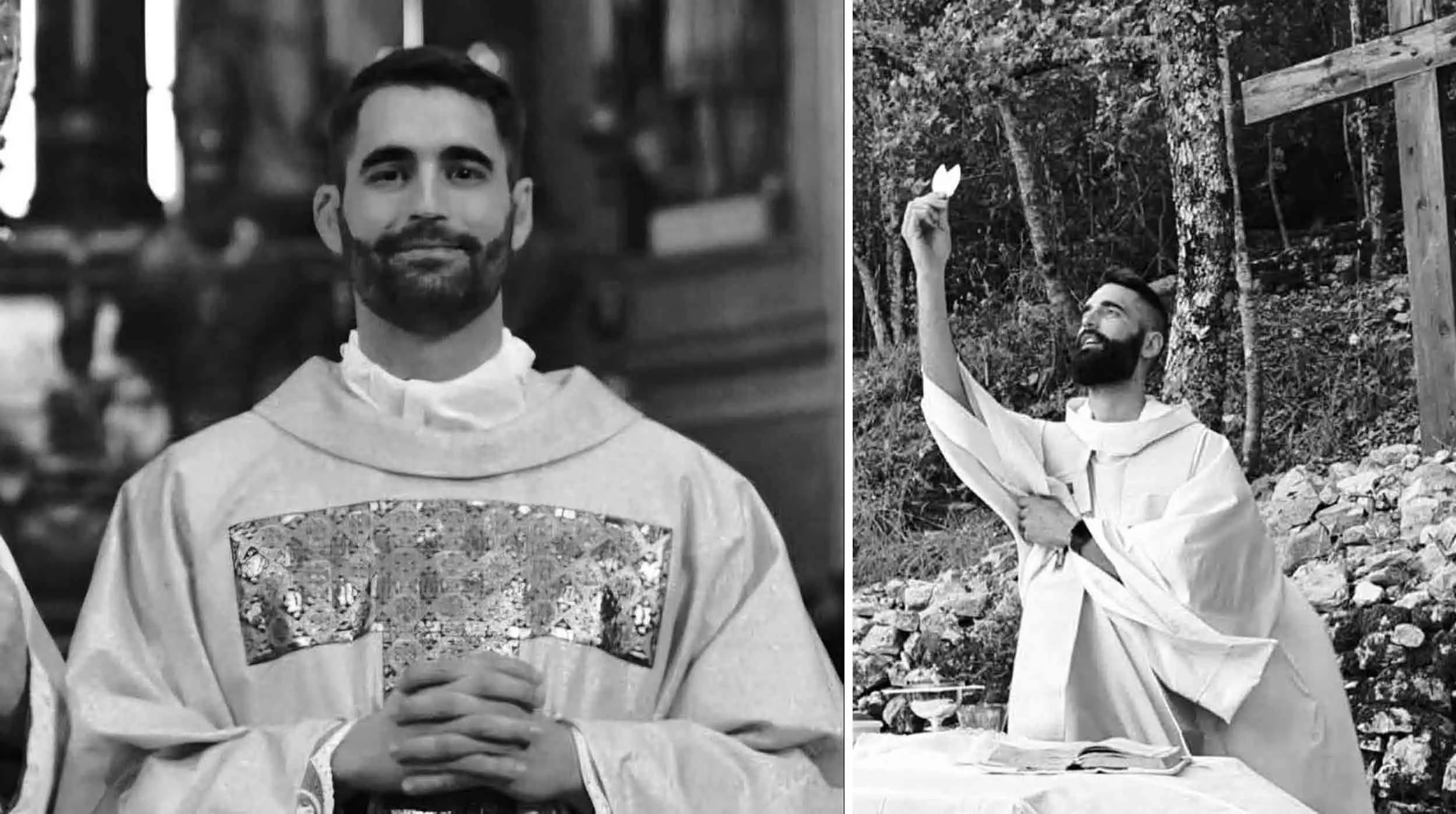
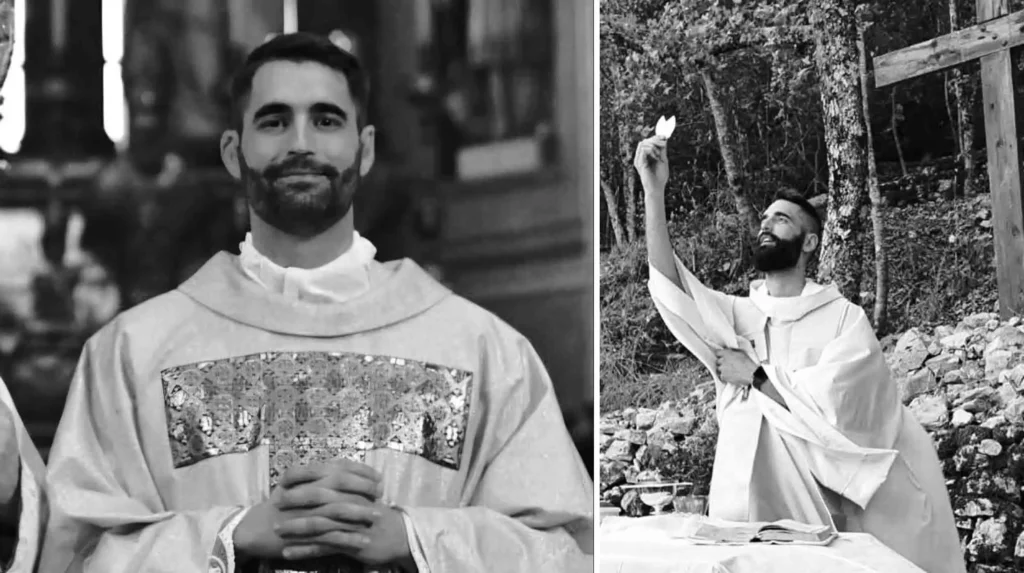


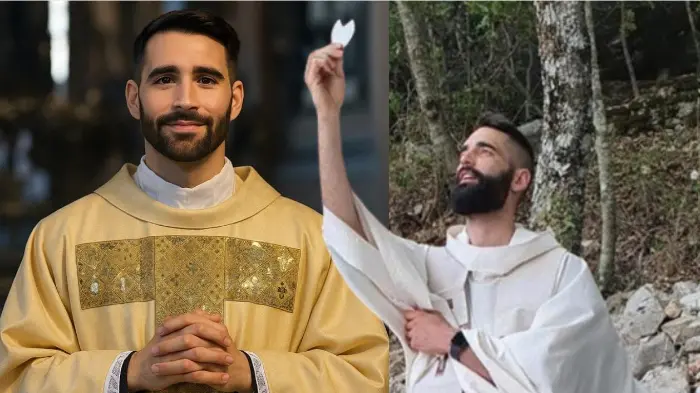
In the context of modern society, where psychological and spiritual pressures are increasingly prevalent, the Catholic Church is not immune to heartbreaking tragedies. The case of Father Matteo Balzano, a young Italian pastor who chose to end his life at the age of 35, not only shocked the local community but also sparked profound reflection on the priestly ministry, mental health, and God’s mercy.
Background and Key Details
On July 6, 2025, in Cannobio – a peaceful town in northern Italy, in the diocese of Novara – Father Matteo Balzano was found dead in his home after failing to attend Mass as scheduled.
The diocese of Novara officially confirmed that his death was a suicide, news that shocked the community. Matteo Balzano, born in 1990, entered seminary at age 20 and was ordained a priest after seven years of training.
His pastoral journey included serving in the parishes of Borgosesia, Trecate, the Diocesan Center for Vocations, and most recently in Cannobio, where he was particularly known for his dedication to youth.
Cannobio Mayor Gian Maria Minazzi expressed the community’s shared grief: “News of Father Matteo’s death has left the entire community silent and in pain.”
He went on to emphasize: “However, there was nothing to suggest he was struggling. He had built good relationships with the youth and had just organized Grest – the parish-run summer camps for children.”
And further: “He was loved by everyone. We never noticed any signs of discomfort. We really don’t know what happened.”
These words paint a portrait of a dedicated and passionate priest, but at the same time highlight the unexpectedness of the event, prompting us to question the silent pain that can lurk behind an ordinary facade.
The incident led to a prayer vigil attended by thousands of people the following Monday, demonstrating the profound influence of Father Balzano. However, behind this tragedy, experts and theologians have pointed to a possible cause: burnout, a problem increasingly common among young priests.
Theologian Giorgio Ronzoni, parish priest of Padua and author of the book Ardere, non bruciarsi (Burning without being burned), analyzed: “The transition from seminary life to parish life is a change that can cause a crisis.”
He further emphasized: “Let us not forget that young priests are only ‘presbiteros’ – meaning ‘older’ – in sacramental terms: otherwise, they are young, and if suicide is the second leading cause of death among young people after traffic accidents, then there must be a reason.”
From a Catholic perspective, these quotes are not just facts but also a warning. Father Balzano represents the younger generation of priests, those called to live as “elders” spiritually but still carrying the burdens of youth: loneliness, pastoral pressures, and the abrupt transition from the protective environment of the seminary to the complex realities of the parish.
Burnout Syndrome and Related Factors
According to the analysis in the article, the leading cause of Father Matteo Balzano’s suicide was burnout syndrome – a state of overall physical, emotional, and mental fatigue resulting from prolonged work pressure without adequate rest or support. In the priestly context, burnout often stems from a complex interplay of factors, and this incident has reopened the discussion of mental health within the Church.
First, the transition from seminary to parish life is a major shock. Seminary provides a structured environment, a close-knit community, and ongoing guidance, while the parish demands that priests be self-reliant, facing a multitude of practical challenges such as caring for parishioners, organizing events (like Grest, which Father Balzano had just completed), resolving conflicts, and sometimes social isolation.
As Ronzoni pointed out, this change is a “puede causar crisis,” leading to feelings of being overwhelmed and disoriented. elsiglo.com.pa For a young priest like Balzano, only 35 years old, having to play the role of an “older person” in sacramental terms while remaining psychologically young can create a deep internal conflict.
Secondly, there is increasing pastoral pressure in the context of the European Church facing a decline in the number of priests. According to Vatican statistics, the number of young priests in Italy and other European countries is gradually decreasing, leading to a situation where a single priest has to take on more parishes or responsibilities.
Father Balzano, with his role closely associated with youth and organizing activities such as summer camps, may have been burdened with too much without time for rest. The lack of outward signs, as Mayor Minazzi observed, suggests that burnout often occurs silently, with symptoms such as persistent fatigue, loss of motivation, and feelings of hopelessness – factors that can lead to desperate decisions.
Thirdly, there is the social and cultural factor in Italy, where suicide is the second leading cause of death among young people after traffic accidents, as Ronzoni emphasizes.elsiglo.com.pa Young priests are not immune to these problems; they remain human beings with emotional needs, but the ministry of celibacy and sacrifice can increase feelings of loneliness. In the Catholic Church, the teaching on priestly celibacy (according to the Second Vatican Council) aims to help priests imitate Jesus, but without spiritual support, it can become a burden.
From a Catholic perspective, burnout is not a sign of weakness of faith but a reminder of human fragility. The Bible teaches that even Jesus himself was weary and needed rest: “Jesus was weary from his journey, so he sat down by the well” (John 4:6).
Saints like Saint John Vianney, patron saint of priests, experienced periods of exhaustion during their ministry in Ars, but he overcame them through prayer and the Eucharist. Similarly, Saint Teresa of Avila described “dark nights of the soul” as opportunities for sanctification if confronted with faith. Balzano’s case calls for the Church to apply these lessons in practice, through psychological support programs and regular rest periods.
Furthermore, a lack of public awareness may be an indirect cause. Although Balzano was well-liked and showed no obvious signs, Monsignor Massimo Angelelli from the Italian Bishops’ Conference emphasized: “I want to convey that there are always other options; no one should think they are trapped, that there is no way out. There is always another option.” This message serves as a reminder that the Church must become a sanctuary, a place where priests can share without fear of judgment.
Catholic Perspective: Life, Mercy, and Lessons
From Catholic teaching, suicide is a grave tragedy because life is a sacred gift from God: “All life belongs to Me” (Ezekiel 18:4). Catholic doctrine (numbers 2280-2283) teaches that suicide contradicts self-love and love for one’s neighbor, but at the same time emphasizes mercy: God judges according to circumstances, and those who act in desperation may not have full free will. We do not judge Balzano’s soul but ask for God’s mercy.
This case is a call for reform in the Church. St. John Paul II’s Apostolic Exhortation Pastores Dabo Vobis emphasizes integral formation for priests, including mental health. Pope Francis has called the Church a “field hospital” for healing wounds, and we need initiatives such as support groups, burnout workshops, and collaboration with Catholic psychologists.
The lesson for the faith community is unity: “For as in one body we have many members… all are members of one another” (Romans 12:4-5). The faithful must support the priest through prayer, listening, and sharing the burden. Hope is always present, as Jesus promised: “Come to me, all you who are weary and burdened, and I will give you rest” (Matthew 11:28).
Prayer
Lord Jesus Christ, who suffered out of love for humanity, we offer to you the soul of Father Matteo Balzano, the young pastor who ended his life in sorrow.
Have mercy on his soul, embrace him in your boundless mercy. Grant strength to young priests facing burnout and loneliness, helping them find true rest in you.
We pray that you may awaken in our Church a sensitivity to support one another, and that everyone may recognize that there is always a way out in God’s love. O Mary, Mother of Priests, intercede for us. Amen.
💬 Bạn có Ý Kiến về Bài Viết Này:
👉 Tham Gia Thảo Luận: TẠI ĐÂY